
How to Fix QuickBooks Error 6131 0 When Opening a Company File?
May 13, 2026
Admin |
Estimated Read Time : 5 MIN
Managing your finances in QuickBooks Desktop requires smooth access to your company file. However, users may sometimes encounter QuickBooks error 6131, 0, which can interrupt daily accounting tasks. This error usually appears while opening or creating a company file, displaying messages like:
“Error 6131, 0: QuickBooks has encountered a problem and needs to close.” “QuickBooks is unable to open this company file.”
The issue often occurs due to a damaged company file, a corrupted installation, or a misconfigured hosting environment. In this guide, we’ll explore the causes and provide step-by-step solutions to resolve error code 6131, 0 quickly and effectively.
In this section, we’ll examine the key factors that can prevent your company file from opening in multi-user mode and lead to QuickBooks error code 6131, 0
Using an outdated QuickBooks Desktop
Possible data damages or network connectivity issues
Hosting might be enabled on the local computer
Damages or corruption to the .ND and .TLG files
Incorrect or damaged installation of QuickBooks
The company file might be in too many folders
Conflicts between the background processes and the payroll update
Not having enough Windows file and folder permissions
Windows Firewall or anti-virus might be blocking QuickBooks
Top 9 Fixes for QuickBooks Error 6131 0 When Opening a Company File
Below, we will explore methods to help you resolve all the problems we discussed above and ensure you can open the company file seamlessly without QuickBooks error 6131 0 appearing on your screen.
1. Update QuickBooks Desktop
Using an outdated version of QuickBooks means missing out on the latest security patches and features. It can cause incompatibility with Windows, which might hamper other QuickBooks processes, including opening a company file on the network. Update QuickBooks Desktop to the latest release and ensure the software is secure and provides a seamless experience.
2. Run QuickBooks File Doctor
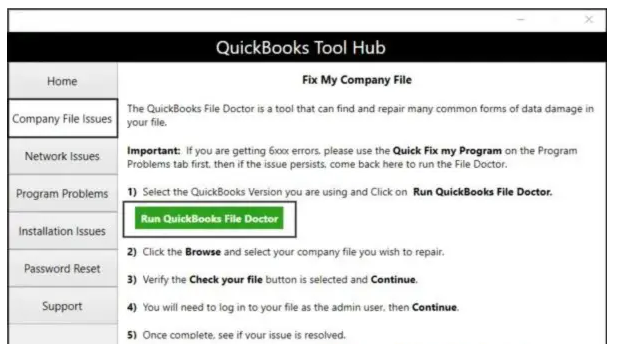
The QuickBooks File Doctor verifies the company file for potential data damage and network connectivity issues, then runs a quick repair.
In QuickBooks File Doctor, choose your company file from the drop-down menu. If you don’t see the company file, click Browse and search to find it.
Click Check your file (the middle option only), then Continue.
Enter the QuickBooks admin password to allow access and click Next.
If you still encounter issues after running the QuickBooks File Doctor, proceed with the steps below.
3. Check if Hosting is on for all workstations
It’s recommended to use only one computer as the server to host your company’s files.
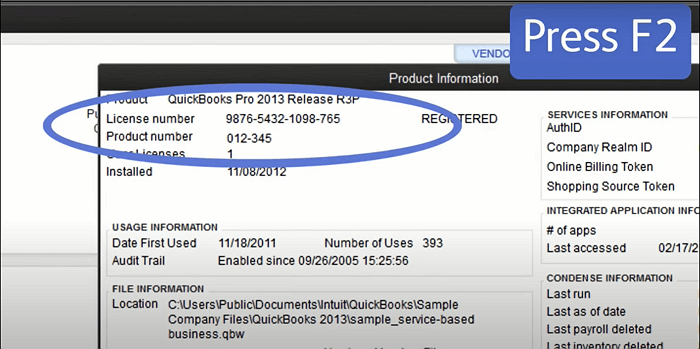
Open the Product Information by pressing F2.
Look for Local Server Information. Th hosting should be turned off on each workstation.
4. Rename the .ND and .TLG files, and run the Database Server Manager from the QuickBooks Tools Hub
.TLG (Transaction Log) and .ND (Network Data) are configuration and support files automatically generated by QuickBooks Desktop to manage multi-user access and track data changes.
Renaming the .ND and .TLG files will automatically recreate themselves, resolving any potential data damage or corruption that might be hindering network access to the company file. Also, make sure to run the QuickBooks Database Server Manager to scan these files for hosting again.
a. Rename the .ND and .TLG file
Locate the folder that has your company file.
Look for the files with the same name as your company files, but with the .ND and .TLG extensions at the end.
company_file.qbw.nd
company_file.qbw.tlg
Right-click each company file.
Choose Rename. Add the word .OLD at the end of the company file name.
Example: company_file.qbw.nd.OLD
b. Run the QuickBooks Database Server Manager
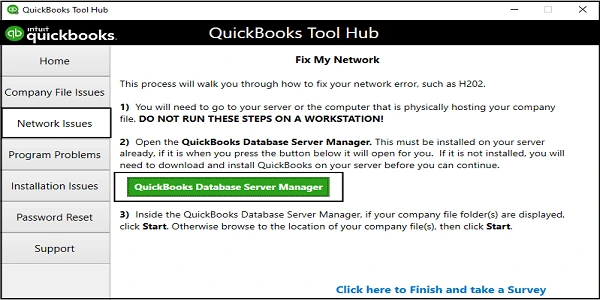
The QuickBooks Database Server Manager lets you host your QuickBooks company files on the network. Restart QBDBSM to scan your company file after renaming the .ND and .TLG files.
Let’s run the QuickBooks Database Server Manager from the Tool Hub:
Launch QuickBooks Tool Hub.
In the left menu bar, choose Network Issues.
Click on QuickBooks Database Server Manager. Install QuickBooks on the server computer if you haven’t already.
In the QuickBooks Database Server Manager, click on Start Scan if you have your company file(s). If you don’t, click Browse, locate the company file, then select Start Scan.
Open QuickBooks Desktop and try to sign in to your company file again.
If the error persists, go to the next solution.
5. Open a sample company file from a workstation
When you open a sample company file, it runs a test on your company file to determine whether the problem is with the company file or QuickBooks. If you fail to open a sample company file and get an error, it means the QuickBooks installation is damaged and needs to be repaired.
Open a Sample File and then choose from the list of your sample company files.
If you open the sample company file, go to the next solution.
6. Repair the QuickBooks installation files
Let’s repair the incorrect QuickBooks installation and damaged or corrupted software installation files or folders using different tools in the Tool Hub.
a. Run the Quick Fix my Program
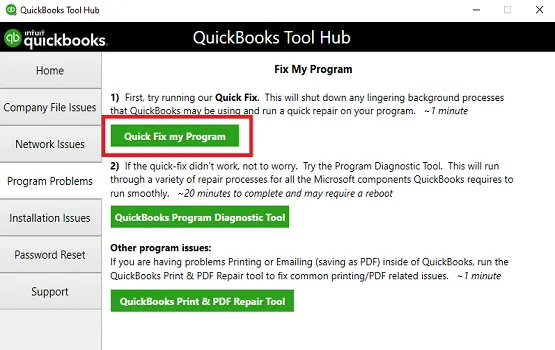
The Quick Fix my Program will shut down all open background processes used by QuickBooks. It will run a quick repair on your program.
Launch the QuickBooks Tool Hub.
Choose Program Problems.
Click on Quick Fix my Program.
Open QuickBooks Desktop and then open your company file.
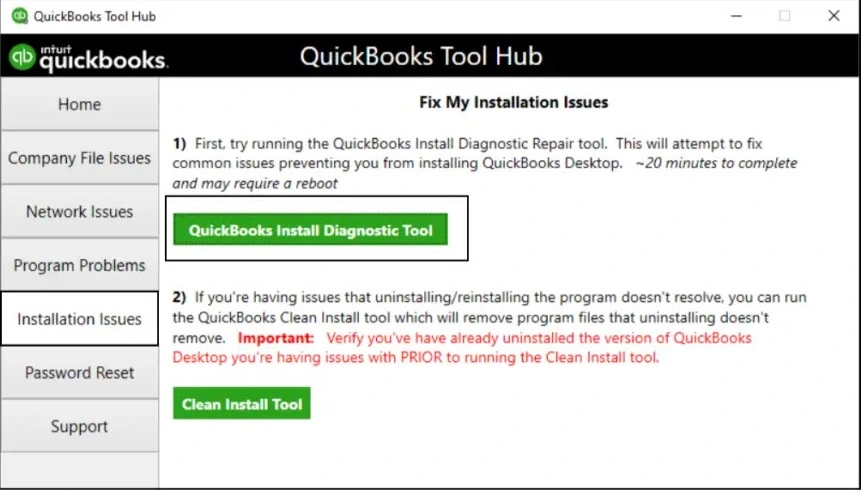
b. Run the QuickBooks Install Diagnostic tool
If something went wrong during the QuickBooks install, it can cause problems when you try to use it. Fix such common installation issues using the QuickBooks Install Diagnostic tool:
Launch the QuickBooks Tool Hub.
In the left menu bar, choose Installation Issues.
Click on QuickBooks Install Diagnostic Tool. It can take up to 20 minutes to run; let it run until then.
When the tool finishes, restart your computer, launch QuickBooks Desktop, and then open your company file.
Update your QuickBooks Desktop to the latest release. This ensures you use the most recent fixes and security updates.
6. Copy the QuickBooks file to the Desktop
Copy the file to your desktop and open it to check if the issue is related to the location of your company file.
If the file opens from the desktop, the original folder where it was saved may be damaged.
The file could also be stored in too many nested folders, exceeding the system’s file path limit.
If the file still won’t open after moving it, it may be corrupted.
To do this:
Open the folder containing your company file.
Locate the file with the .QBW extension.
Right-click the file and choose Copy. Then, go to your desktop, right-click anywhere, and select Paste.
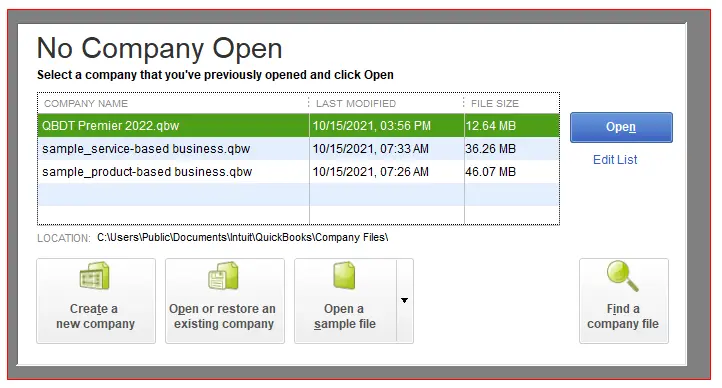
Press and hold the Ctrl key while opening QuickBooks to access the No Company Open window.
Click Open or restore an existing company, browse to your desktop, select the company file, and open it.
7. Close all QuickBooks processes
The QB processes running in the background might hamper the software update, triggering QuickBooks error 6131, 0.
Sign in as an Administrator on the server computer.
Launch the Task Manager by pressing Ctrl+Shift+Esc.
Click on Show processes for all users. Select Users.
Choose each QuickBooks process (QBW32.EXE, qbupdate.exe, and QBDBMgr.exe), then End Task.
Now, try to open your company file in multi-user mode.
8. Check the folder permission manually
Incorrect file or folder permissions in Windows can prevent QuickBooks from accessing essential company and payroll files. This can disrupt payroll updates, cause errors during tax table downloads, and block paycheck processing. Ensuring you properly set up the folder and Windows access permissions helps maintain smooth payroll functionality, prevents update failures, and protects sensitive employee and tax data from access conflicts.
9. Configure firewall ports and Anti-Virus Software
Note: Because Intuit does not develop antivirus applications, we’re unable to give detailed instructions on configuring this exception. For assistance, contact your antivirus software provider or consult their support resources.
Conclusion
Understanding QuickBooks error 6131 0 is essential to keeping your accounting workflow smooth and uninterrupted. Since this issue is often caused by network or company file problems, timely troubleshooting can help restore access quickly and prevent further disruptions.
If the error continues, consider contacting certified professionals at QuickBookSupportNet.
Frequently Asked Questions
What is QuickBooks Error 6131, 0?
QuickBooks error 6131, 0 is a company file error that usually occurs when QuickBooks is unable to open or access a company file. It often occurs in multi-user environments and is typically caused by network configuration issues, file corruption, or firewall restrictions.
Is error code 6131, 0 related to multi-user mode?
Yes, QuickBooks error 6131, 0 is directly related to multi-user mode and occurs when a company file is accessed locally rather than through the proper server hosting, or when network configuration files (.ND or .TLG) are damaged.
What are the main causes of the company file error code 6131, 0?
QuickBooks error 6131, 0 typically occurs when the software cannot access the company file, often caused by local file hosting issues, damaged .ND or .TLG network data files or incorrect network configuration.
Can a corrupted company file trigger company file error code 6131, 0?
Yes, a corrupted or damaged company file can trigger QuickBooks error code 6131, 0, which commonly occurs when QuickBooks cannot properly open, access, or initialize the company file (.QBW) or its related files.
How can the QuickBooks Tool Hub help resolve a company file error?
The QuickBooks Tool Hub resolves company file errors by providing a centralized dashboard to fix damaged data, network issues, and permission problems. Key tools include the File Doctor (for 6000-series errors), Quick Fix My File (for general corruption), and the Database Server Manager (for network H-series errors).
About The Author
Lana Creston is an experienced technical and accounting writer with a total of 9 years of experience. She currently works on QuickBooks accounting and technical guides at QuickBookSupportNet. Lana has a passion for reading and writing about various technical topics, especially exploring new accounting methods and software, while continuously expanding her expertise in the ever-evolving field of finance and technology.
Effortlessly handle data tasks or get expert assistance with:
Data Automation
Conversion & Migration
Integration
Tax Filing & Compliance
QuickBooks Desktop 2023 is ending — Upgrade QuickBooks Desktop 2023 to 2024 for continued performance and support.