
A Detailed Guide to Troubleshoot QuickBooks Error 1723

Jun 22, 2026

Admin |

Estimated Read Time : 5 MIN

Stuck with a software installation or update and seeing QuickBooks Error 1723? You’re not alone. This error can suddenly interrupt the process, leaving you unsure of what went wrong and how to proceed.

You may even encounter the message: “There is a problem with this Windows Installer package,” which indicates that a required installation component is either missing, corrupted, or unable to execute properly. This generally happens due to an outdated OS version, compatibility problems, or even damaged system components that prevent the installer from running smoothly.

In this blog, we’ll explore the causes behind error code 1723 and walk you through effective solutions to fix it, so you can complete your installation without further interruptions.

What Causes Install Error 1723 in QuickBooks Desktop? 

Install Error 1723 in QuickBooks Desktop typically occurs when there is an issue with Windows components or system configuration, preventing the software from installing properly. The following are some common causes of this error:

  • The Windows operating system may not be up to date.
  • Windows system files or folders may be damaged.
  • There may be insufficient permissions for the %temp% folder.
  • Windows components, such as the Microsoft .NET Framework, may be damaged or corrupted.
  • Program files may be damaged, or the software may have been installed incorrectly.
  • Third-party programs may be interfering with the software processes.

Top 6 Solutions to Resolve QuickBooks Error 1723 When Trying to Install

In this section, we will explore different troubleshooting methods that will help by pass error code 1723 in QuickBooks and ensure a seamless software installation. Proceed with these steps carefully: 

1. Update Windows 

Ensure that your Windows operating system is up to date and compatible with the version of QuickBooks Desktop you are using:

  • Launch the Windows Start menu. 
  • Type Settings in the search field. 
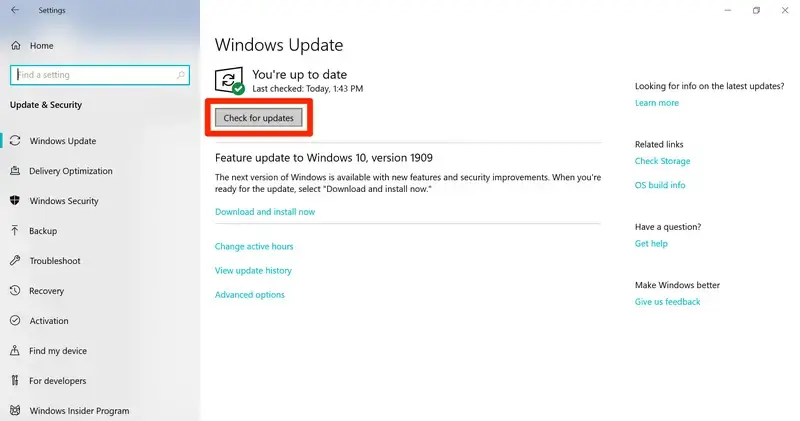
  • Choose Windows Update in the left pane. 
Windows update
  • Click on Check for Windows updates
  • If the updates are available, click on Download & Install
  • Now, your computer will automatically download and install the updates. 
  • When prompted to do so, restart your device to apply the updates.

2. Run the SFC scan

The SFC scan checks Windows files and folders for any damage or corruption and automatically repairs them. Here’s how you can run the utility:

  • Press the Windows+X to open the Quick Link menu. 
  • In the menu, choose Command Prompt (Admin).

NOTE: You may also run the System File Checker (SFC) from Windows PowerShell (Admin).

  • Click Yes on the User Account Control (UAC) prompt.
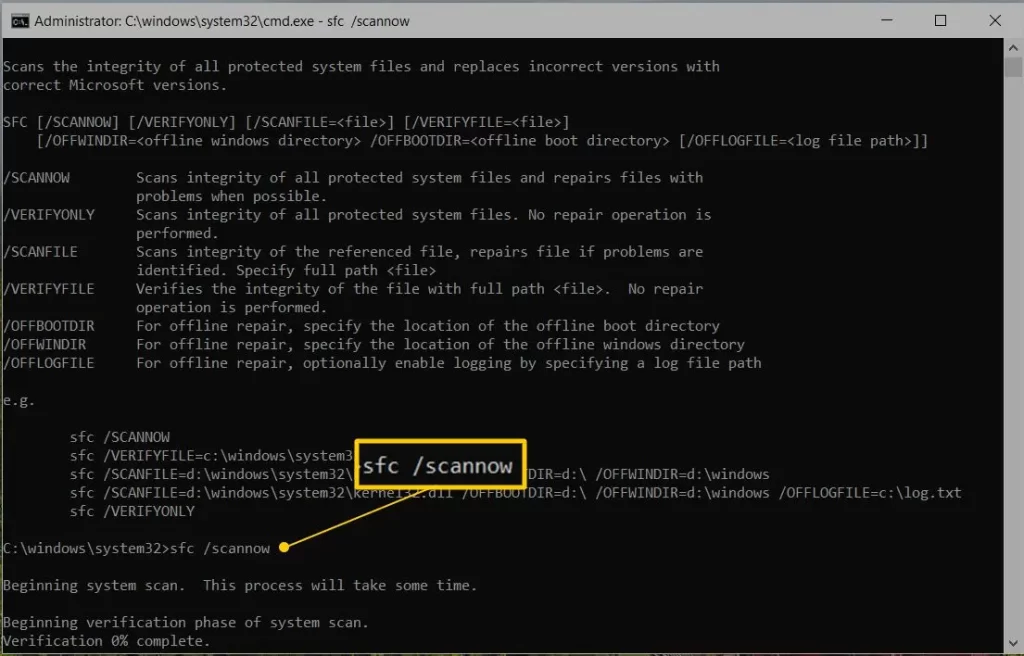
  • Type SFC/scannow in the command prompt window and press Enter
sfc scannow
  • The System File Checker (SFC) utility checks the integrity of Windows system files and repairs them if required.
  • After the process is complete, reboot the computer.

3. Edit the permissions in your Windows %temp% folder

Sometimes, incorrect folder permissions can prevent QuickBooks Desktop from accessing the files it needs during installation. Updating the permissions of the %temp% folder can help resolve this issue. Follow the steps below:

  • Press the Windows key to open the search bar.
  • Enter %temp% and hit Enter to access the TEMP folder.
  • Right-click inside the folder and select Properties.
  • In the Properties window, navigate to the Security tab and click Edit.
  • Select your Windows user account and enable Full Control under the Allow column.
  • Click OK to save the changes, then close the window.
  • After that, try reinstalling QuickBooks Desktop.

4. Manually fix the Windows components

If running the QuickBooks Install Tool and updating the software didn’t resolve the issue, you may need to manually fix certain Windows components.

These steps are recommended only for IT professionals, experienced Windows users, or individuals working with guidance from Microsoft support.

Repair or reinstall Microsoft .NET Framework

  • Close all running QuickBooks applications.
  • Open the Start menu on your Windows computer.
  • Type Control Panel in the search box and press Enter.
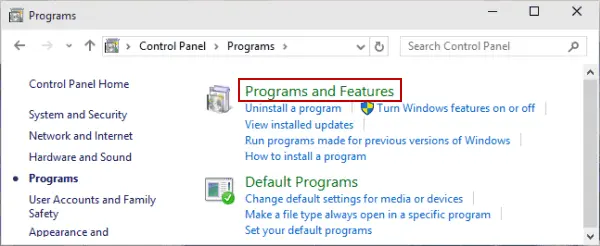
  • Go to Programs and Features.
Programs and Features
  • Click on Uninstall a Program (you won’t actually remove anything).
  • Select Turn Windows features on or off.
  • Locate and select .NET Framework from the list.
  • Check the configuration for both .NET Framework 4.5 (or newer versions) and .NET Framework 3.5 SP1.

Note: The same process applies when repairing .NET Framework versions 4.5, 4.6, 4.7, and 4.8.

5. Repair QuickBooks Desktop 

If QuickBooks Desktop is not functioning properly, repairing the program can help fix common installation and performance issues. Follow the steps below:

Note: Before proceeding, download and install the latest version (1.6.0.8) of QuickBooks Tool Hub from the official Intuit website.

a. Run Quick Fix my program

he Quick Fix will shut down any open background processes QuickBooks uses.  It’ll run a quick repair on your program.

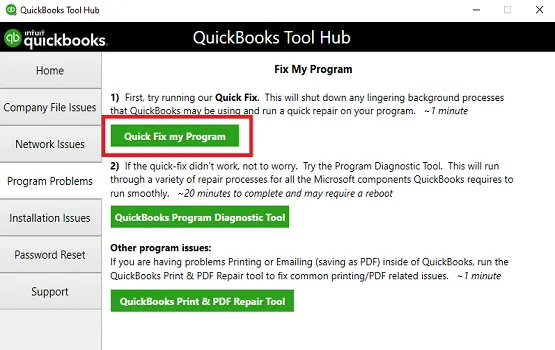
  • In the QuickBooks Tool Hub, go to Program Problems.
  • Click on Quick Fix my Program.
Quick Fix my Program
  • Once it’s done, open QuickBooks Desktop and access your company file.

b. Run the QuickBooks Install Diagnostic Tool

If the issue is related to an incomplete or faulty installation, you can use the QuickBooks Install Diagnostic Tool to resolve common setup problems:

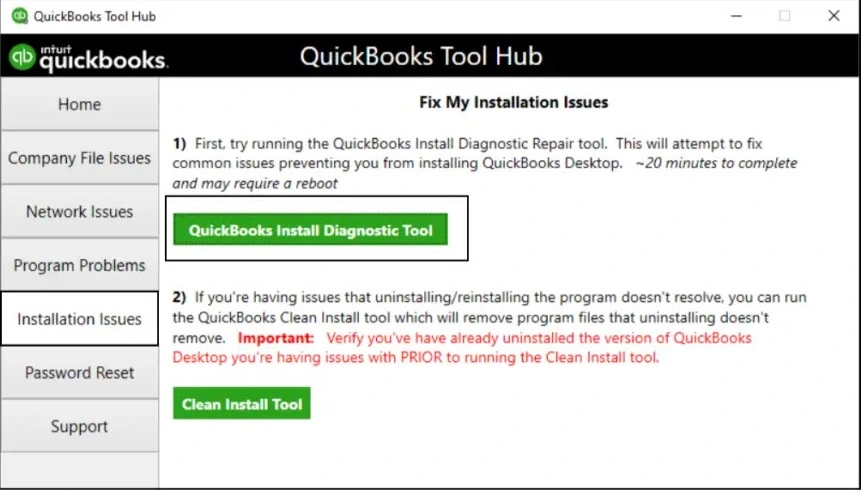
  • Open the QuickBooks Tool Hub and select Installation Issues.
  • Click QuickBooks Install Diagnostic Tool and allow it to run (this may take up to 20 minutes).
QuickBooks Install Diagnostic Tool
  • After it finishes, restart your computer. Then launch QuickBooks Desktop and open your data file.
  • Finally, update QuickBooks to the latest version to ensure you have current fixes and security updates.

6. Reinstall QuickBooks in Selective Startup 

To prevent other applications from interfering with the installation, you can switch your system to Selective Startup mode.

a. Switch to Selective startup

To prevent other applications from interfering, you can switch your system to Selective Startup. If you’re unsure about these steps, consider reaching out to your computer manufacturer or a Windows professional.

  • Press Windows + R to open the Run dialog box.
  • Type msconfig and click OK.
  • Under the General tab, select Selective startup and enable Load system services.
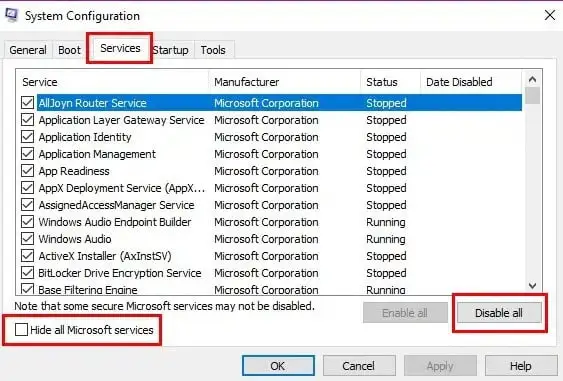
  • Go to the Services tab.
  • Check Hide all Microsoft services, then click Disable all.
Hide-all-Microsoft-services
  • Uncheck Hide all Microsoft services.
  • From the list, select Windows Installer.
  • Click OK, then choose Restart in the System Configuration window.

b.  Reinstall QuickBooks Desktop and return to normal startup

  • Reinstall QuickBooks Desktop.
  • Press Windows + R again to open the Run dialog.
  • Type msconfig and click OK.
  • In the General tab, select Normal startup.
  • Click OK, then choose Restart to apply the changes.

Conclusion 

Finally, we conclude this guide on QuickBooks error 1723 and the factors that trigger installation issues related to Windows installer components. By following the troubleshooting steps outlined above, you can effectively resolve the error and ensure a smooth installation or update process without interruptions.

If the issue persists, it is advisable to seek help from a QuickBooks ProAdvisor or get in touch with Intuit support for quick and dependable assistance. Dial 866-500-0076 now!

Frequently Asked Questions 

What is QuickBooks error 1723?

    QuickBooks error 1723 is an installation error that occurs when the system cannot run a required Windows Installer package. It usually indicates a problem with system files, installer components, or permissions needed to complete the installation.

    Why is QuickBooks Desktop not working?

      QuickBooks Desktop may stop working for several reasons, such as:

      • Corrupted program files
      • Outdated Windows operating system
      • Damaged company files
      • Conflicts with other software
      • Missing or damaged components like the .NET Framework

      How do I reinstall QuickBooks Desktop?

        To reinstall QuickBooks Desktop, follow these steps:

        • Uninstall QuickBooks from the Control Panel.
        • Restart your computer.
        • Download or insert the QuickBooks installation file.
        • Run the installer and follow on-screen instructions.
        • Enter your license and product details when prompted.

        For best results, use the “Clean Install Tool” to remove leftover files before reinstalling.

        What triggers QuickBooks error 1723 during installation?

          This error is usually triggered by:

          • Damaged Windows installer components
          • Corrupt or missing system files
          • Insufficient permissions for temporary folders
          • Interrupted or incomplete installation
          • Conflicts from antivirus or third-party programs

          Can outdated Windows cause QuickBooks error 1723?

            Yes, an outdated Windows system can cause this error. Missing updates may lead to incompatibility issues or missing system components required for QuickBooks installation.

            Is QuickBooks error 1723 related to the .NET Framework?

              Yes, it can be related. If the Microsoft .NET Framework is damaged or not properly installed, QuickBooks may fail to install and show Error 1723 because it depends on this component to run correctly.

              About The Author

              Lana Creston

              Lana Creston is an experienced technical and accounting writer with a total of 9 years of experience. She currently works on QuickBooks accounting and technical guides at QuickBookSupportNet. Lana has a passion for reading and writing about various technical topics, especially exploring new accounting methods and software, while continuously expanding her expertise in the ever-evolving field of finance and technology.

              QuickBooks Desktop 2023 is ending — Upgrade QuickBooks Desktop 2023 to 2024 for continued performance and support.

              Get a Free Consultation with Our QB Tax Experts