
How to Fix QuickBooks Error 6177 When Opening the Software?

Mar 24, 2026

Admin |

Estimated Read Time : 5 MIN

QuickBooks error 6177, 0 is a company file–related issue that can interrupt your work when opening your QuickBooks Desktop data file. This error commonly appears with prompts or messages such as

Invalid Customer: The customer you have specified has been deleted.”
Something’s not quite right / An unexpected error occurred,” or
Account Period Closed, Cannot Update,”

leaving users unsure how to proceed. Problems such as incorrect file placement, permission restrictions, or server and network configuration issues are often to blame. This guide explains what causes error code 6177 0 and outlines the steps needed to resolve it so you can regain access to your company data smoothly.

What Causes QuickBooks Desktop Error 6177? 

Understanding the reasons behind QuickBooks install error 6177 is the first step toward fixing it and preventing it from recurring in the future:

  • Outdated QuickBooks Desktop version
  • The company file was opened from an unsupported location
  • Network interruption between the server and the workstations
  • Corrupted or missing .ND configuration file
  • Incorrect folder permissions on the server
  • QuickBooks Database Server Manager is not installed or misconfigured
  • Multi-user hosting settings are incorrectly configured
  • The company file is stored on an external drive or a cloud sync folder
  • Corrupted company file data
  • The server is not properly hosting the company file

Top Methods to Fix QuickBooks Error 6177 When You Open QB Desktop 

Here are the most effective solutions you can follow to resolve QuickBooks Error 6177 and successfully open your company file in QuickBooks Desktop:

1. Update QuickBooks Desktop

Updating QuickBooks Desktop to the latest release fixes error 6177 (a “cannot locate path” issue in multi-user mode) by patching outdated network components, refreshing company file paths, and updating the Database Server Manager to properly locate files on the server. This ensures the software can access the company file. 

2. Update the file location 

If you keep your company file on a server, an external hard drive, or in the cloud, you should change its location. Use these steps to move it to your local drive, then back to where it was.

a. Move your company file 

Note: Ideally, you should perform these steps on your server computer (the one that hosts your company files). If you don’t have access to it, that’s OK. You can follow these steps on one of your workstations (a computer connected to your server that doesn’t host your company files).

  • Launch the Windows Start menu either on the server computer or your workstation.
  • In the search bar, type File Explorer and press Enter to open it. 
  • Now, look for your QuickBooks file folder or press F2 while QuickBooks is still open to get the location. 
  • Find your company file, but with the .QBW extension. It should look like this: [company name].qbw.
  • Write down the name of the drive and the exact folder path—you’ll need to return the file to this location later. Refer to the example below:
  • Transfer your company file from its current folder to the C: drive. Make sure you move only the file itself, not the entire folder.

b. Create a portable company file and restore it to your server

Your company file is now stored on a local drive, so you can proceed with creating a portable company file. A portable file is a compressed copy of your financial data and helps reset file location details.

  • Open QuickBooks Desktop on the computer where you moved the company file.
  • Choose Open or Restore an Existing Company.
  • Browse to the company file on your C: drive and open it.
  • Create a portable company file. This generates a compact version of your data and refreshes the file’s location information.
  • From the File menu, select Quit, then reopen QuickBooks.
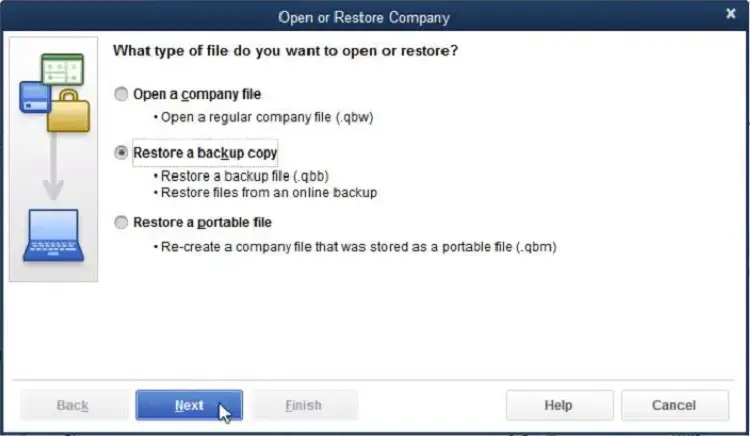
  • Go back to File and select Open or Restore Company.
Open or Restore Company
  • Choose Restore a portable file, then click Next.
  • Locate and select the portable company file (QBM) you created, then choose Open and Next.
  • When prompted for a restore location, select the original drive where the company file was stored (the one you noted earlier).
  • Click Save to place the company file back on the network.
  • Finally, open the File menu and select Quit to close QuickBooks.

3. Run QuickBooks File Doctor on the server computer

The QuickBooks File Doctor verifies the company file for potential data damage and network connectivity issues. If anything is detected, it also runs a quick repair. 

Important Note: To run the File Doctor, make sure to download and install QuickBooks Tool Hub (1.6.0.8) in the latest release. 

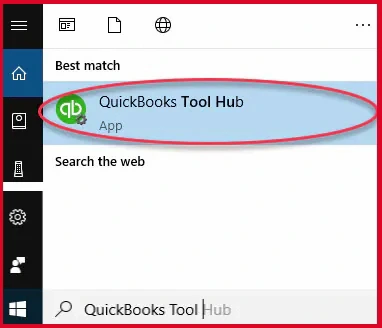
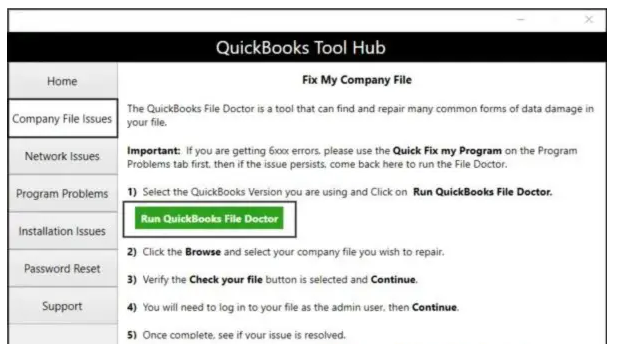
  • From the QuickBooks Tool Hub, choose Company File Issues.
QuickBooks Tool Hub
Run QuickBooks File Doctor
  • In QuickBooks File Doctor, select your company file from the drop-down list. If it’s not listed, choose Browse and locate the file manually.
  • Select Check your file (the middle option only), then click Continue.
  • Enter your QuickBooks admin password and select Next.

The scan duration depends on the size of your company file and may take 10–15 minutes. In some cases, the scan may display an unsuccessful message even if the issue is resolved. Once the scan is complete, open QuickBooks and then open your company file.

4. Manually fix the file path

Learn how to resolve the company file path issue, which can cause QuickBooks to shut down unexpectedly when opening a company file and trigger QuickBooks error 6177.

a. Find your ND file

  • Open File Explorer on the server computer and locate the folder where your QuickBooks company files are stored
  • Look for the file that ends with .qbw.nd and includes your company name (for example, [CompanyName].qbw.nd).
  • Right-click the .ND file and choose Delete. This will not remove or damage your accounting data.

b. Configure QuickBooks Database Server Manager

If it’s not already installed, download and install QuickBooks Database Server Manager.

  • On the server computer, open the Windows Start menu.
  • In the search box, type Database and launch QuickBooks Database Server Manager from the results.
  • Choose the QuickBooks folder where your company files are stored.
  • Click Start Scan to scan the selected folder.
  • Once the scan is complete, select Close.
  • Adjust the folder permissions so the company files can be shared across the network.

After completing these steps, open QuickBooks on all connected computers. The issue should now be resolved.

If you have the full version of QuickBooks on your server

If the full version of QuickBooks Desktop is installed on your server computer (not just the Database Server Manager), follow the steps below. If it isn’t installed, proceed with the standard troubleshooting steps instead.

a. Reset multi-user hosting

  • Open QuickBooks on the server computer.
  • Select the File menu, then hover over Utilities.
  • Choose Stop Hosting Multi-User Access and click Yes to confirm.
  • Go back to the File menu and select Quit QuickBooks. This resets the hosting settings.
  • Reopen QuickBooks, but do not open your company file.
  • Select the File menu again and hover over Utilities.
  • Choose Host Multi-User Access and click Yes to confirm.
  • Finally, select the File menu and choose Quit QuickBooks.

b. Move your company file to your server’s local hard drive

If your company file isn’t stored on the server’s local C: drive, move it there first and then create a portable company file.

  • On the server computer (the one hosting your company files), open the Windows Start menu.
  • Type File Explorer in the search bar and open it.
  • Locate and open your QuickBooks folder. You can also press F2 while QuickBooks is open to view the file location.
  • Find your company file with the .qbw extension (for example, [CompanyName].qbw).
  • Note the drive name and folder path—you’ll need this information to return the file later.
  • Move only the company file (not the entire folder) from its current location to the server’s C: drive.

c. Create a portable company file

Once your company file is stored on the server’s (or workstation’s) local drive, you can create a portable company file. A portable file is a compressed copy of your financial data.

  • Open QuickBooks Desktop on the computer where you moved the company file.
  • Select Open or Restore an Existing Company.
  • Browse to the company file on the C: drive and open it.
  • Create a portable company file.
  • From the File menu, select Quit QuickBooks.

d. Create a new folder for QuickBooks

  • Open File Explorer and locate your QuickBooks folder.
  • On the server’s local C: drive, create a new folder and give it a clear, easy-to-recognize name.
  • Copy all contents from the QuickBooks folder—including the newly created portable company file—and paste them into the new folder on the C: drive.

e. Reopen QuickBooks

  • Open QuickBooks.
  • Choose Open or Restore an Existing Company instead of selecting a company from the list.
  • Select Open a Company File, then click Next.
  • Browse to the new folder and open the portable company file (.QBM) you moved there.
  • Finally, open QuickBooks on all connected computers. The issue should now be resolved.

Conclusion

In conclusion, this guide has outlined the key causes and effective solutions for QuickBooks error 6177, which commonly occurs due to permission issues, incorrect folder settings, or damaged company files. By carefully following the troubleshooting steps above, you can restore smooth access to your data and prevent future disruptions in QuickBooks. 

If the error persists or you need expert help, contacting a certified QuickBooks ProAdvisor can ensure a quick and reliable resolution. Dial (866) 500-0076 now!

Frequently Asked Questions 

How can I fix QuickBooks error 6177?

    To fix QuickBooks error -6177, 0, update QuickBooks, copy the company file to your local drive, turn off hosting on workstations, and run the QuickBooks File Doctor tool.

    Does QuickBooks Desktop error 6177 affect my data?

      No, this error does not delete your accounting data. It only restricts access to the company file until the issue is resolved.

      Can I prevent error code 6177 when opening QB in the future?

        Yes, ensure proper folder permissions, keep QuickBooks Desktop updated, and store company files in a secure, accessible location.

        Why is QuickBooks attempting to open a company file?

          QuickBooks attempts to open a company file to load financial data for daily tasks such as bookkeeping, payroll, reports, syncing updates, or restoring the last used company file during startup for continuity.

          About The Author

          Lana Creston

          Lana Creston is an experienced technical and accounting writer with a total of 9 years of experience. She currently works on QuickBooks accounting and technical guides at QuickBookSupportNet. Lana has a passion for reading and writing about various technical topics, especially exploring new accounting methods and software, while continuously expanding her expertise in the ever-evolving field of finance and technology.

          Quick, clear, and hassle-free QuickBooks assistance.

          Get a Free Consultation with Our QB Tax Experts
          Connect with Our Certified QuickBooks Professionals - Dial Tollfree: +1(866)500-0076